For part of our trailer we wanted to make a sound track from scratch so that it was completely original. For this we used 'LogicPro' so that we could make and combine different sounds to make a track.
To start with we used a keyboard to make certain sounds, the track had to be around 20 seconds long so we started with an underlying sound as a bass.
We then started experimenting with different sounds from the keyboard by changing the pitch and style of sound. On 'Logic' you are able to change the settings so that you press down on a key on the keyboard and it makes a completely different sound for example, a bell ringing.
We then downloaded different sound effects e.g. Saw-FX, which was sawing sound, we repeated this sound so that the horror effect was enhanced.
There was a total of 15 individual sound effects which we edited together to make our soundtrack, and for some of them we synthesised the sound, or added a deeper bass so that is sounded creepier. For the 'Bassline3' (see above) we increased the volume so that it became a deeper bass sound. For some of the sounds I layered them over each other so that the soundtrack increased its intensity as the trailer went on.
For part of the sound we recorded a music box playing. It was a traditional music box which played a child like tune. This helped our trailer conform to the stereotype that child like music is played to make something become creepier. There were two music box sounds we could have chosen, the first being the pink one which is being used in the teaser trailer as it is more girly.
For the second music box we recorded the sound as it was a better lullaby which was more appropriate to use in our trailer.
At first we recorded almost 30 seconds of the music, however we only needed to use around 5 seconds so we split the sound clip until we had just the right amount and it began and finished at an appropriate point.
We decided to place the sound of the music box playing as the production company was fading out, so we started the tune quietly and increased the volume as different clips started playing.
Reversed music box.
Half way through we added a synthesised drum beat which was played alongside the opening credits 'It's all fun and games' when this is played we reversed the music box sound so that it became scarier, we also increased the volume so that it built up suspense for what was coming.
For part of our sound within our trailer we decided to record the music box being wound up. With this sound we placed it at the beginning of our trailer when the production company 'Twisted Pictures' was being played. To make the winding sound more repetitive we split the whole clip until we only had a small sound clip, and copied and paste it next to each other so the same sound was repeated.
Once we had our initial sound we were able to experiment with the placement of the sound. As our production company was 'Twisted Pictures' we placed the winding alongside when the wire wound round the screw.
We then changed the pitch and volume of each clip so that at the beginning the sound slowly fades in and slowly increases the volume so it builds up the suspense of what is going to happen after the production company.
We used an underwater camera for the bobbing for apples drowning scene
We wanted to use an underwater camera to show the victim and we thought it would be effective within our trailer
When we came to edit the underwater footage we found that because the container we used was fairly shallow, the actors face was very close up and was sometimes unclear
When editing we decided to show more footage of the actors face plunging into the water instead as this was more effective and much clearer
We also tried reversing the footage of the actor bringing their head up from the water to see if this looked better
We chose to include also an over the shoulder shot of the antagonist forcing the victims head under the water to show that it is bobbing for apples which reflected the torturous party element
To reflect the general form of a horror trailer, we began ours with slow-paced equilibrium. To do this, I:
added the best clips from the footage of the victims disappearing
trimmed the clips to a reasonable length of which we'd want them
rearranged the clips so shots of the victims and the antagonist were intercut to create enigma and tension
chose to reduce each victim's disappearance to 2/3 shots of which the first 2 shots were shown of each to start a story. I used fades between the shots to emphasis the slow-pace and mystery
then when the titles create more tension and disequilibrium is beginning to be introduced I included much shorter clips of the victim's being spied on or disappearing to quicken the pace.
This scene depicts the main protagonist sitting in the middle of a bed staring down at a music box. This scene including two shots; the first being a pan from behind our main protagonist, and round to face her. The second shot was a close up of her slamming the music box shut.
The music box was a pink one with a teddy bear in a pink dress spinning round, it also played a tune which we recorded so that we can use it as part of our music. We also recorded the sound of the music box being wound up to maybe use as the beginning of the trailer.
The first shot started as a mid shot behind Amy (main protagonist) she was wearing her 'party dress' and wore her hair and make up in a girlish manner to keep the continuity of the other shots. Instead of using a tripod we just handheld the camera so that we could have a better continuous shot without it looking unprofessional. We moved the camera round from behind Amy, and panned it around the side of her until we were in front of her. This continuous shot proved difficult as keeping our hands steady was tricky, however we got a good continuous shot that we were happy with.
The next shot was a close up, low angle shot looking up at Amy as she slams the music box shut. We angled the shot so that when the music box was open you couldn't see Amy's face, yet when she slammed it shut you could see her full face. A good effect was that when the music box was open it played the tune, however when it shut it abruptly stopped. The shot was tried various times as we got a shot of Amy looking into the camera, but also staring straight forward, so that when we edit it gives us more options.
We decided to do an extra shot in the bedroom scene. This was an over the shoulder shot, where we positioned the camera so that in the little mirror in the music box we could partially see Amy's face, and also see the teddy bear spin around. having this extra shot gave us more options so that when we edit we can play around with all the different shots.
The trailer starts with what looks like someone changing channel as the screen is fuzzy. We then see the title ‘The Truman show’ as a non diegetic narrator says ‘the Truman show’ being the biggest set ever constructed.
The camera zooms in on Truman as he says ‘good morning, good evening and good night,’ the camera then jump cuts to an interview with the creator of ‘The Truman show’ explaining how there are over 5000 cameras hidden.
The audience then see some of these cameras including; one in a necklace, in a bin, and in a pencil sharpener. The use of introductory credits saying ‘What if. . .’ allows the audience to see it isn’t an actual TV show and Truman doesn’t know he is being watched.
There is then a montage of different clips from the film, including a mid shot of his wife showing a gadget which is ‘dishwasher safe’ as though advertising it. It also shows Truman being rained on in only one place, which shows that it is mechanically being programmed to rain. There is a short montage of different clips from when Truman was born; a newspaper clip goes across the screen saying ‘a star is born’
The trailer then changes as a camera falls and there’s a point of view shot as Truman looks up and sees a crack in the sky close up. A non diegetic song then comes in the background as Truman tries t escape from his life and there is a close up shot of him saying ‘everyone is pretending.’
It then jump cuts to Truman on a boat in a storm shouting ‘is that the best you can do’ and the creator shouting to increase the rain.
The trailer then ends with all different clips from the film merging together to make up Truman’s face.
This clip has one long shot
of a blizzard showing mountains in the background. It looks like a very secluded
place away from anything or anyone else.
There is also an extreme
close up of what looks like blood splatters which then forms letters.
Sound-
It starts off with diegetic
sounds of a snowy blizzard alongside a non diegetic voiceover of a man
narrating what the film is about.
There is then the non
diegetic sound of a typewriter being used inferring that it will have a
significant part within the film.
Mise en scene-
The snowy mountains in the
background with the darkened sky could show the desolate place in which the
film is set.
The use of red lettering of
‘MISERY’ allows the audience to infer the film has violence, bloodshed and
death involved. The use of having misery written in the background but smaller
with a blue tint contradicts the red as it represents calmness and
tranquillity.
Editing- The use of the non diegetic voiceover explains partly
what the film is about without giving too much away as the on screen clues are
minimal. The cutaways used of the typing show the audience what the title is as
well.
The poster looks as though it’s advertising for a TV
programme, however the tag line is ‘on the air, unaware’ which indicates what
the film is about that although it’s a programme, ‘Truman’ is unaware. It is a TV programme within a film.
The title is at the bottom of the screen which doesn’t
follow the typical conventions of a film poster as it is not in the eye line.
The picture of him quietly sleeping is again
enhancing that he is blissfully oblivious to what is actually happening, and that people are looking at him.
The
fact it is a big screen with the words ‘live’ makes it seem even more real and
the 'Day 10,909' showing how long this has been on air.
The angles in the scene are very standard for a general discussion scene. There are close-ups for reaction shots and mid-shots to show more of the characters actions.
There’s a close-up of Jennifer talking and then with blood in her mouth. The angle increases the effectiveness of the shot, causing more shock and terror which appeals to the target audience.
The shock and intensity of the scene is broken when Chip (Needy’s boyfriend) interrupts an out of focus, long-shot of the crowded corridor. The audience are then seeing from Needy’s point–of-view. This is conventional for a horror as it causes the audience to feel more scared because they’re in the characters’ position.
There are high and low angles of Chip and Needy when they’re on the stairs. The high angles are of Chip as he feels helpless in the situation as he doesn't know what’s happening to Needy and is extremely worried about her. On the other hand, the low angles are of Needy as she believes she has the upper-hand in the situation because of her research but Chip isn't listening to her.
The high-angle long-shot of Needy on the balcony emphasises how Chip has left and now she is alone in the scene as well as the problem with Jennifer. This gives her a vulnerability which allows the audience to sympathise with her.
Sound
The scene is introduced with a non-diegetic soundtrack: a melancholy, eerie, piano melody to set the scene and understand how Needy is feeling. Her non-diegetic dialogue as a voiceover says at this point ‘Jennifer and I hadn't spoken since our encounter in my room. Actually, I hadn't really spoken to anyone.’ This proves how alone she is already in the situation because she knows the truth and is working by herself to try and solve the problem.
When the shot of Jennifer’s bloody mouth is shown, a quiet but echoing screech is heard. This supports the shocking image well to scare the audience.
When Chip enters the shot, the eerie music stops in a windy echoing fade. This represents how Needy is snapped out of her vision and back to reality, showing how Chip is there to keep her grounded. Therefore, we know at the end of the scene when he leaves that Needy is going to get in too deep.
Chip tries to keep the conversation normal by asking Needy if she’s ‘made reservations at the cheesecake factory?’ and awkwardly laughs as he says ‘hey’.
Through her dialogue, we can tell Needy is paranoid, anxious, serious, panicky, upset and regretful when she explains to Chip what’s happened to Jennifer and that ‘it’s not safe to be together right now’. Chip’s tone on the other hand is confused, concerned and in disbelief.
Needy begins her explanation by exhaling and saying ‘okay’ to prepare herself. She then outwardly says in an amused and disbelieving tone ‘Jennifer’s evil’ and ‘not high school evil’. She talks about ‘demonic transference’ which happens if you ‘try to sacrifice a virgin to Satan without using an actual virgin’ which the band did to her after the fire. This means that ‘the devil will forever reside in the soul of the victim. She must forever feed on flesh to sustain the demon…’. All of the occult explanation creates more tension to the film as it adds a spooky but realistic element to the horror film. This sort of explanation/plot reveal is a convention of the horror genre as it makes the plot seem more realistic and therefore more effective as a film.
To put this into perspective for Chip, she explicitly announces that ‘she’s eating boys!’ She goes on to explain her worries about the dance and how ‘it’ll be like an all-you-can-eat buffet’. This overtly gives the audience a clue to what will happen which is done to give the effect that the audience will be expecting this as the climax of the film and from now on the tension will build exponentially.
There is no musical soundtrack at this point in the scene to provide a clear focus on the dialogue as it’s integral to the plot.
There are some lines of dialogue which have a comedic element to them which is a convention of teen horror. Chips says ‘not some girl I made love to for four minutes the other night’, and when describing Jennifer as ’weak, cranky and ugly’ she goes on to say ‘I mean, like, ugly for her’.
After Needy tells Chip it’s unsafe for them to be together, they’re both silent. It’s at this point that a non-diegetic music soundtrack begins. It’s an upbeat female acapella which introduces a repeated beating drum as the shot cuts to the long shot of Needy on her own.
Mise en Scene
Needy’s costuming tells us about her personality long before she went into the mental hospital. She wears a woollen hat and round glasses being the stereotypical ‘American loser’ meaning she’s vulnerable and victimised but could also mean she’s intelligent and a good problem-solver which means the audience have faith in her.
Needy is look down and avoiding eye contact and as she glances up she looks anxious and deep in thought. At this point in the film, Needy has found out a lot of information and an explanation for the happenings and now it’s up to her to find a way to solve the problem and save the day.
Jennifer strongly contrasts Needy, looking healthy and happy chatting wearing a bright pink jacket. This shows how she has the power and things are going her way. She then seems to taunt Needy by showing her grin covered in blood as if after anotherattack.
Chip is a sterotypical quiet high school boy as he wears a graphic t-shirt and checked shirt with his mousey brown floppy hair. He also seems vulnerable compared to Jennifer’s overtly sexual and powerful character.
Over than specific school-related decoration e.g. football and prom banners and noticeboards in school colours, the rest of the school is very plain. This supports the idea that the school is in a small town which is devoted to the school spirit and has a close, tight-knit community, therefore these attacks are even more feared however day-to-date life still carries on as normal.
The occult book that Needy shows Chip is large with a brown cover suggesting it’s old but in fact has a new, modern finish inside but with archaic images. This could reflect how the film’s themes have been brought from classical and traditional horrors but are now in a modern setting of a high school.
Editing
The first shot zooms into Needy as we see how deep in thought she is and to increase the emotion of the scene.
Jennifer talking is in slow motion as if Needy is in a dream state but the next shot of Jennifer’s bloody mouth suggests how she’s probably hallucinating. I like the use of slow motion for this effect. The slow motion could also be there to emphasise how she’s looking from down the corridor at Jennifer. Their distance is also shown though bodies passing the camera during shots. This lends to an interest transition of showing Jennifer normally to then with a bloody mouth.
The camera goes from a shot of the corridor to tilt up to Chip as if this is actually Needy’s head movement. This effect is given as the audience have been put in her position of a dreamy/hallucination state so naturally hey should be brought back to reality, too.
There is a tracking shot of Needy and Chip walking across the corridor which follows them to the stairs. This shows how the action in this scene is focused on them as a couple as opposed to Jennifer.
There is then a jump cut however to them sitting on the balcony at the top of the stairs, which shows a clear progression in time, cutting out the action of them walking up the stairs which is not relevant or needed so the action is moved forward more quickly. This is important as this scene is predominantly dialogue.
The first section of
the scene doesn't show Needy’s face but rather shots showing the back of her
head and parts of her body. Although these shot’s do not immediately give her
an identity, they do build up a persona for her through mise en scene and sound.
Not showing her face creates enigma, conventional for a horror which appeals to
the target audience who want mystery and intrigue.
There is an aerial establishing
shot showing the gymnasium, which sets the scene and shows Needy’s grim/grey world
full of unstable girls in orange uniforms.
An extremely short
over-the-shoulder shot gives the audience the illusion of being in the orderly’s
position as Needy attacks her. This causes a shock which appeals to the target
audience who want to be scared or feel threatened.
Close-ups are
intrusive and show the emotion and feelings of the characters. They also
captivate the audience in the action (which is appealing), for example as the
nurse spits out blood and the most inspirational shot of the scene of Needy
staring right into the camera (see image).
Another inspirational
example is an overhead shot of the isolation cell that could be linked
relatively to CCTV. It’s an interesting angle to show all the action from while
emphasising the size and height of the cell as well as her isolation and
detachment form society.
This links well with
the use of high and low angles to emphasis her vulnerability and entrapment.
Sound
Objective character
identification is given through a female non-diegetic narration on the
soundtrack. This is Needy introducing herself in the present time before she
lends to a flashback in the next scene (and for the rest of the film). Her tone
of voice is not melancholy or depressed as perhaps expected but more
matter-of-fact with comedic elements showing how messed up she is. The
narration also doesn't give everything away to the rest of the story, creating
enigma and appealing to the target audience.
The tone of Needy’s voice is
reflected in the non-diegetic soundtrack of an echoey synth/piano which is
slightly melancholy but not dramatic or depressing. In recreation time, the music
is now a catchy guitar riff with a sense of comedy and mischief. In the
canteen, a piano melody does become gloomier. These different motifs could
represent the different sides to Needy’s personality giving the audience more
of a clue to her character. This is an inspirational example as it gives clues
about the character but not in an obvious way which appeals to the target
audience. The sense of enigma and mystery is also a convention of teaser
trailers therefore it would be relevant to use this technique in our
coursework.
The next part of the scene where
Needy kicks the nurse, there isn't any music to emphasise the violence and its
sound effects: the kick, punches, smashes and cheering. This would appeal to
the target audience through the use of violence and gore.
When the nurse confronts Needy
about her eating habits, her reply is empty and expressionless. This is quite a
contrast to her voiceover and therefore the audience could guess that she has a
bad relationship with orderlies or she’s just ‘playing up for them’ b
misbehaving and attacking. After kicking her, Needy aggressively shouts ‘I
recommend you shut the fuck up!’ and then spits which is very shocking
especially after how dead she seemed not so long ago in this scene and how calm
her voiceover was. Her psychotic personality is further supported by her angry
screams and gasps when she’s put in isolation. This quick change of
mood/personality is something that we could use in our coursework for our main
antagonist.
She knows how psychotic she is
however as she explains how she ‘ wasn't always this cracked’ and ‘after the
killings I began to feel, I don’t know, loose around the edges or something’. This
is a possibility for our coursework, however we must first decide whether we
think our antagonist should know what she’s doing wrong.
Diegetic muzak/elevator music
plays in her cell to which she very negatively responds ‘God! I hate this
fucking song!’ Later on the film, it becomes clear why as the band who play
this song ruin her life. The fact that it is elevator music is interesting
though as it is used to calm patients down and creates the right atmosphere for
the scene whilst giving a comedic effect.
Mise en Scene
The first section of the scene is
shown in Needy’s room. She is facing a barred window in a hospital gown
surrounded by presents she explains are from ‘her fans’ including teddy bears
but also religious symbols such as crucifixes as they want her to ‘accept Jesus
Christ into my heart’. The teddy bears, her bunny slippers and her long,
flowing blonde hair give her an innocence that poses a lot of questions, the
main one being why is she in a mental institution?
A close-up of a
boy’s picture on her windowsill is focused on as she says ‘nobody ever comes
back’ suggesting he is no longer with her. She also says ‘nobody ever gets off
the cross’ which suggests he was killed for no wrong-doing as Jesus was. This
appeals to the audience as it creates enigma.
Extreme close-ups of her
file show doctor’s notes on her condition. These include ‘hallucinations’,
‘uncontrollable fits’ and ‘put several orderlies in hospital’ and ‘KICKER’.
This gives the audience more clues about her condition which increases tension
as this makes her more of a threat.
The nurse holds a clipboard
and wears a badge with an apple on. This could be seen as condescending to
Needy which might be why she attacks the nurse especially as the nurse is
telling her what to eat.
The extreme close-up of the
nurse’s tooth in a pool of blood is gory and gruesome, which appeals to the
target audience. This and the fact blood is a convention of horror films is why
it’s a particularly inspirational shot.
The overhead shot of the cell show
that there is an cross or ‘X’ on the floor which is an ominous symbol. It’s
also associated with ‘cross out, Needy/Jennifer’ which is a recurring line in
the film.
I think the reason the shot of
Needy staring at the camera bathed in moonlight works so well is firstly
because of the lighting. It is also down to the bags under her eyes, pale
complexion, flushed cheeks and glassy stare. This is a memorable and
inspirational example we could replicate in our coursework.
Editing
The first shot zooms
out from the window and tilts down from Needy to the presents on her floor.
This camera movement is inspirational as it makes a long, interesting shot
which originally could have been a few short shots that are unoriginal. The
fact that the camera swoops down over a long period of time gives equilibrium
to the scene.
Several shots after this and in
the gymnasium are slow-motion which also contributes to the slow editing pace
which gives a sense of calm. As well as these are fades and slow pans and
zooms. These also give the illusion of a dreamy state which could be
representative of Needy’s state of mind.
This contrasts greatly to the
quick-paced editing of when Needy attacks orderlies. As said before this shows
various sides to Needy’s personality. The fact that the quick cuts come
unexpected provides a shock for the audience which appeals to the target
audience and is a convention to the horror genre.
A memorable section of the scene
is 2 of the shots in the cell. Firstly the time-lapse effect of the window to
give the illusion of a lot of time going past. And secondly how the shot of
Needy in the moonlight staring at the camera is cut to as she says ‘loose
around the edges’. This cut is parallel to the sound which makes it so effective.


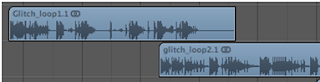 For some of the sounds I layered them over each other so that the soundtrack increased its intensity as the trailer went on.


